So you're thinking about getting your kid some art supplies. Maybe you're putting together a little art studio at home, looking for Christmas or birthday gifts, or just realizing that your preschooler would really love having more opportunities to paint, draw, cut, glue, and make things.
First of all: YES. I love this for you.
Second: you don't need to spend a fortune, and you definitely don't need to buy every adorable little craft kit you see on Pinterest. In fact, I'd argue that a handful of really good, versatile art supplies will get you a lot further than a giant box of single-use crafts.
I've spent over a decade teaching art to children of all ages, running a creative learning program, and watching what happens when kids have access to interesting materials and the freedom to experiment. I'm a big believer in open-ended art, process art, and giving children real opportunities to make their own decisions about what they create. I’m also a mom who understands you don’t want to spend 1 hour setting up and cleaning up a project that your 3 year old spends 2 minutes on.
And I've also learned that the quality of your materials matters. A LOT.
A frustrating paint set, scissors that don't actually cut, or paper that tears every time a child tries to use it can make a kid feel like they're bad at something when really, the materials are working against them.
So here's what I'd actually buy if I were setting up an art space for a child between the ages of 3 and 5, balancing quality supplies that will be fun and satisfying for young artists to actually use, with ease of set-up and clean-up. These are the supplies I genuinely love, use, and recommend in both my children’s art studio, and my own home.
Painting Supplies
Painting is one of my favorite places to start with young children. It's sensory, it's immediate, there's no expectation that they need to make a recognizable picture, and there's so much room for experimentation.
You don't need a complicated setup. A few good paints, some brushes, and paper that can hold up to the experience will go a long way.
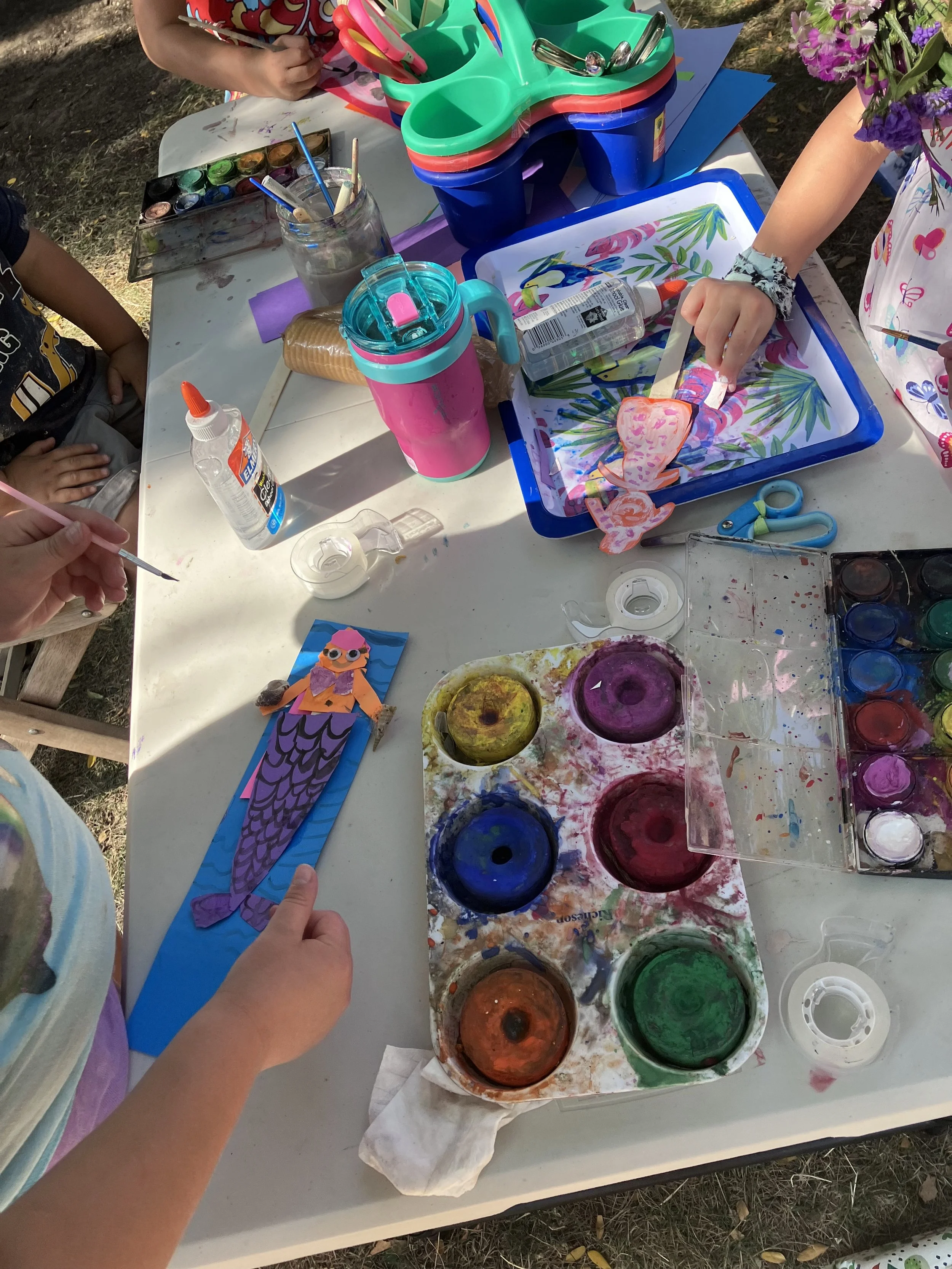
1. Richeson Tempera Cakes
These big, chunky tempera cakes are one of my favorite painting materials for younger children.
They're especially great for ages 3–5 because they're easy to use with big brushes, they're relatively straightforward to set up, and they offer much better pigmentation than many inexpensive watercolor sets.
One of the things I've noticed over and over again is that kids get frustrated when they use those little watercolor pans that barely seem to produce any color. They scrub and scrub, add more water, and still can't get the bright, saturated colors they're looking for.
It's not that they don't know how to paint. It's that their materials aren't cooperating!
Richeson's tempera cakes give children the satisfying, vibrant color they're after without requiring you to break out bottles of liquid paint every time someone wants to make a picture.
Why I love them: Great color payoff, easy setup, easy cleanup, and much less potential for spills than liquid paint.
2. Chunky Painting Brushes
Pair those tempera cakes with some chunky brushes designed for little hands.
I really like these ones with the rounded handle for younger artists. They're easier to grip, hold up to enthusiastic painting, and work especially well with larger painting surfaces and those big tempera cakes.
A little kid doesn't necessarily need a tiny, delicate paintbrush. In fact, starting with a larger brush can encourage bigger movements, experimentation, and whole-arm painting.
Why I love them: They're a good match for young children's developing grip and coordination, and they make painting feel accessible.
3. Faber-Castell Tempera Paint Pans
These are another favorite, and I think they're one of the best investments you can make in a home art studio.
Faber-Castell's tempera paint pans offer really beautiful pigmentation compared with the standard inexpensive watercolor sets you find in most school supply aisles.
You get the convenience of a pan: no bottles to spill, no complicated setup, and relatively easy cleanup. I even take them to the park! But you also get the bright, satisfying color that children actually want when they're painting.
I use these with older children, too, and even kept them in stock in my high school art classroom. They're a supply that can grow with your artist rather than something they'll outgrow in six months.
Why I love them: Excellent pigmentation in a convenient, manageable format. They're a great middle ground between basic watercolor sets and liquid paint.
4. Variety of Brushes
Once kids are ready to have a bit more brush control, I love a variety pack of brushes like these, with different shapes and sizes to choose from. It’s much less frustrating when kids can pick the right tool for the job, like a little brush for little spaces, and a big brush for big spaces. Experimenting with using the different shapes to make different types of lines is also a wonderful way for children to explore mark making before they can even write! As a bonus, this set has squishy grips built in, making them easier for smaller hands to hold.
I’m not actually too brand-loyal here, but please don’t give kids paintbrushes with thick plastic bristles that stick out in all directions like they’ve been electrocuted, and expect them to enjoy the act of painting. Give them a brush that works with them, not against them.
Why I love them: Fun to explore as children are ready for more intentional art making, and need more sophisticated tools for the job.
5. Heavyweight Painting Paper
Okay, let's talk about paper.
You absolutely do not need fancy drawing paper for every single thing your preschooler makes. Regular computer paper is wonderful for drawing. It's inexpensive, most people already have it, and you don't have to feel precious about it when your child makes one mark and moves on to the next sheet.
But painting is different.
Thin computer paper gets soggy, tears, wrinkles, and generally doesn't hold up very well when a child is enthusiastically applying paint.
UCreate painting paper is an excellent value. It's sturdy enough to hold up to painting without costing so much that you're worried about every sheet.
And that's important! You want kids to feel like they can experiment, use plenty of materials, and make mistakes without worrying about wasting something expensive.
Start with one pad, but if you find you have a prolific artist on your hands, spring for the bulk pack of 250 pieces. It’s worth it.
Why I love it: Good quality, affordable, and practical for everyday painting.
Drawing and Color
A good drawing station doesn't need to be complicated. Pencils and markers are classics for a reason, but I do have a few opinions about which ones are worth buying.
6. Crayola Super Washable Markers
Listen, sometimes the classics are classics for a reason.
Crayola Super Washable Markers are one of those things I don't feel the need to overthink. They work well, the colors are good, they're easy for kids to use, and they clean up much more easily than a lot of alternatives.
You don't need to buy a fancy boutique marker set for your preschooler. You REALLY don’t need a giant mega art set of 5,000 markers and colored pencils that never get used because none of them are satisfying for your child to use. You just need markers that actually make marks and won't permanently decorate your dining room table. Similarly, I think Crayola crayons are the gold standard for crayons, and Crayola sidewalk chalk basically puts all others to shame.
Why I love them: Dependable, accessible, colorful, and washable. Sometimes that's exactly what you need.
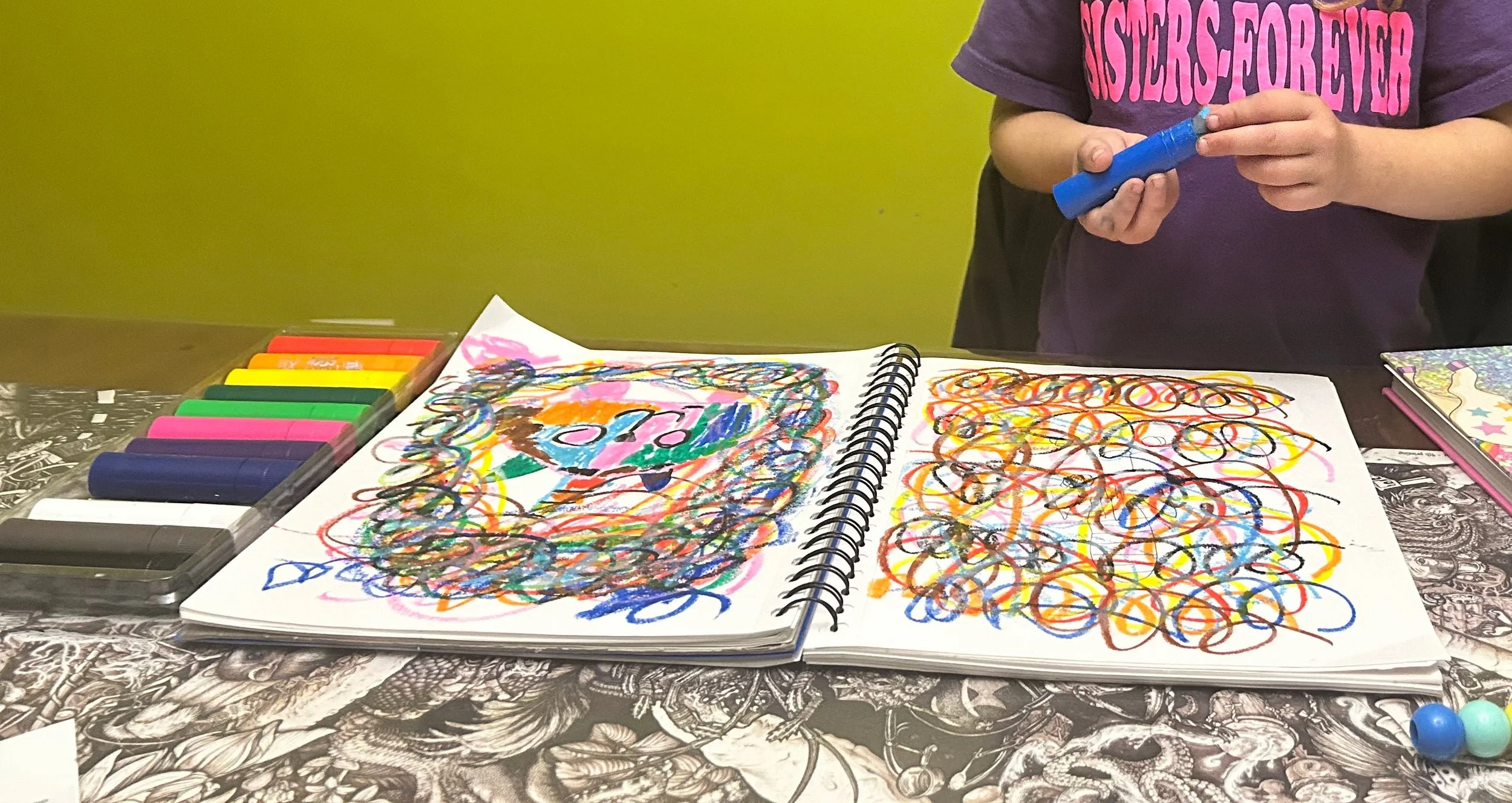
7. Tempera Paint Sticks (Kwik Stix)
Notice a theme here? Tempera is just the best for easy to use, easy to clean paint for little artists. Tempera paint sticks are another really fun option for preschoolers and young elementary-aged children. I’ve included them in the drawing section here because the act of using them is more drawing than painting.
I recommend Kwik Stix because I know they provide good color coverage. I've tried a number of varieties of tempera sticks, and some are a little more translucent than others.
That said, I've never really met a tempera stick I hated. They're just a convenient, low-mess way to introduce another painting/drawing/mark making experience.
Kids can draw with them, layer colors, cover large areas, and experiment with a different way of applying paint.
They're also great for those moments when you want to offer a painting activity but don't want to get out water cups, palettes, and brushes. Just give them a cardboard box and a set of paint sticks, and let them go wild.
Why I love them: Easy to use, relatively low mess, and a fun addition to an open-ended art supply collection.
8. Fat Ticonderoga Pencils
A good chunky pencil is a wonderful thing for a young artist.
Fat Ticonderoga pencils are comfortable for little hands that are still developing their grip and learning how to control a drawing tool.
And Ticonderoga is the classic pencil for a reason. They write well, erase well, and have erasers that actually do their job.
I like giving young children access to real drawing and writing tools rather than assuming they need something that looks like a toy. A good pencil is a good pencil!
Why I love them: A comfortable size for younger children, dependable performance, and a nice introduction to everyday drawing and writing tools.
Sculpture, Construction, and Mixed Media
One of my favorite things about having an art space at home is giving kids materials that can become almost anything.
Not every art activity needs to end in a finished picture. Sometimes children want to build a creature, make a tiny world, construct a vehicle, or spend 45 minutes figuring out how to attach two pieces of cardboard together.
These are the supplies I'd keep around for that kind of creative play.
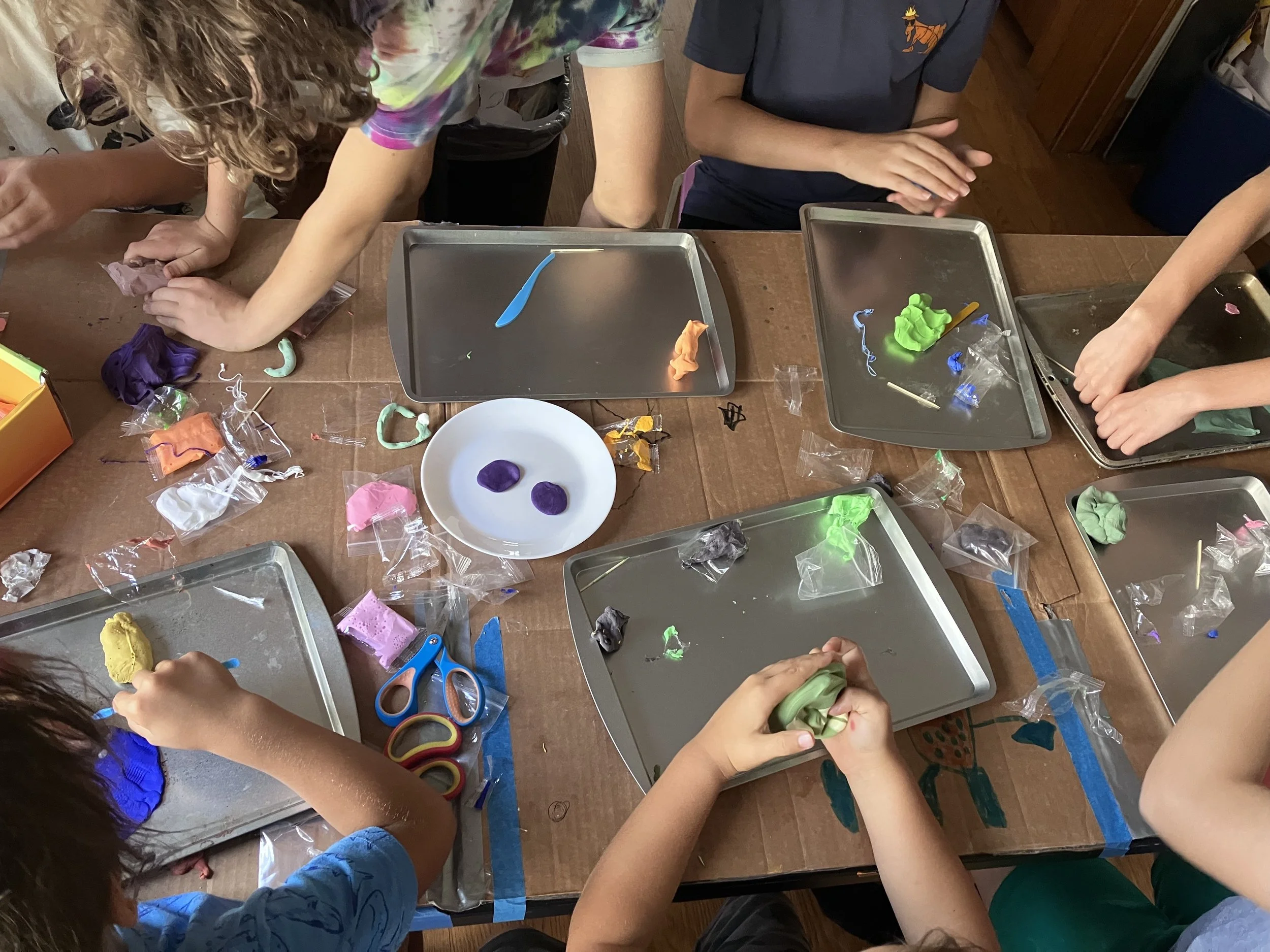
9. Foam Clay
If you haven't tried foam clay yet, put it on your list.
It's a lightweight, colorful, pre-dyed air-dry modeling material. It's fantastic for making sculptures, creatures, tiny objects, and all kinds of three-dimensional creations.
I've tried a number of different varieties, and I don't have one particular brand that I'd insist on. Look for a multicolor set with a variety of bright colors. Many kids love mixing the colors to see what happens.
It's a fun alternative to traditional modeling clay, especially for kids who enjoy sensory materials and want to make something they can leave out to dry. Plus just like playdough or other types of sculpting, it’s great for developing hand strength and grip.
Why I love it: It's approachable, colorful, tactile, and great for open-ended sculpture and model making.
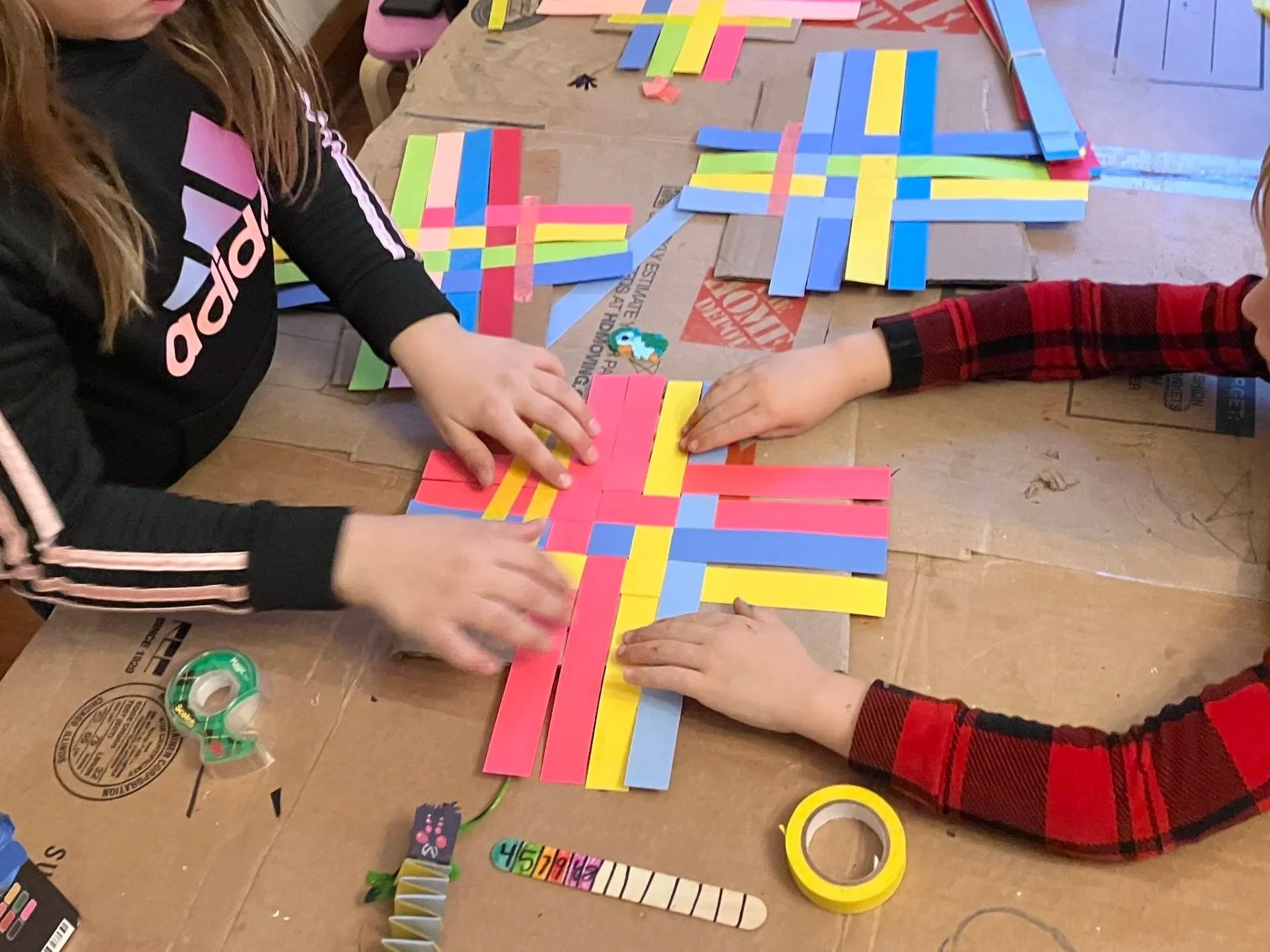
10. Multicolored Masking Tape
I cannot overstate how much children love tape.
Seriously. Give a child a roll of colorful tape and see what happens.
Some kids want to wrap everything in it. Some want to make roads and racetracks on the floor. Some want to decorate their creations, attach things together, or make elaborate constructions.
Colored masking tape has a lot of the appeal of stickers, but it's much more versatile.
It's one of those simple, inexpensive materials that can keep children busy in wonderfully unpredictable ways.
Why I love it: Great for construction, collage, decorating, pretend play, and all sorts of child-led projects.
Tools for Independence
This is the category where I might get a little opinionated.
I think young children should have opportunities to use real tools. Not every tool is appropriate for every child, of course, and adult supervision matters. But we sometimes underestimate what young children are capable of learning when we give them the chance to practice.
11. Fiskars Kids' Scissors
Please buy your child a decent pair of scissors.
I know it can feel a little scary to hand a four-year-old a pair of scissors, but with age-appropriate scissors, clear expectations, and adult supervision, cutting is a perfectly reasonable skill for many preschoolers to begin practicing.
And here's something I've noticed as an art teacher: I've taught a shocking number of seven-year-olds who have very limited scissor skills.
Cutting is one of those everyday activities that gives children opportunities to develop hand strength, fine motor control, bilateral coordination, and hand-eye coordination. Those skills support all sorts of other activities, including writing, drawing, buttoning, zipping, and managing everyday tasks independently.
The problem is that children don't always get many opportunities to practice.
And please don't buy the absolute cheapest pair of scissors you can find. Poorly aligned blades, loose screws, and scissors that don't actually cut can make children feel like they're the ones who aren't capable.
Fiskars makes reliable children's scissors that are a good place to start.
Why I love them: A reasonably priced, dependable tool that helps children build real skills and confidence.
As always, supervise closely, teach children how to carry and use scissors safely, and put them away when the activity is finished.
12. Pacon Tru-Ray Fade-Resistant Construction Paper
You know what's heartbreaking? When your child makes an incredible collage, you proudly hang it on the wall, and a few months later all those beautiful bright colors have faded.
Regular construction paper can be surprisingly prone to fading, especially when artwork is displayed in a sunny spot.
Pacon Tru-Ray is a fade-resistant, acid-free construction paper that holds its color much better than ordinary construction paper.
If you're going to be making collages, paper sculptures, decorations, or artwork that you actually want to keep and display, I think it's worth the upgrade.
Why I love it: Bright, beautiful colors that last longer. It's a small investment that makes a difference when you want to preserve the things your child creates.
So, What Do You Actually Need?
Here's the thing: you don't need all 12 of these supplies to have a wonderful little art space at home.
If I were starting from scratch, I'd prioritize:
A good painting setup: tempera cakes, chunky brushes, and heavyweight paper.
A drawing station: pencils and washable markers.
A few interesting mixed-media materials: foam clay, masking tape, and tempera sticks.
A pair of decent scissors.
That's enough to get a LOT of creative mileage.
And if you're thinking about setting up a little home art studio, I'd focus less on buying a million different supplies and more on making a few good materials accessible to your child.
Put the paper somewhere they can reach it. Keep drawing materials in an easy-to-access container. Have a place where they can leave a project unfinished and come back to it later. Make it okay to experiment, make a mess, and occasionally create something that looks like absolutely nothing in particular.
You don't need to lead an art lesson every time your child wants to make something. In fact, some of the best creative experiences happen when adults step back and let children take the lead.
A well-stocked art space isn't about producing beautiful artwork. It's about giving children the materials, freedom, and confidence to explore what they're capable of making.
And that's worth investing in.
Happy making!
Affiliate disclosure: As an Amazon Associate I earn from qualifying purchases. I only recommend products I genuinely love and would recommend to families based on my experience as an art educator.
